English
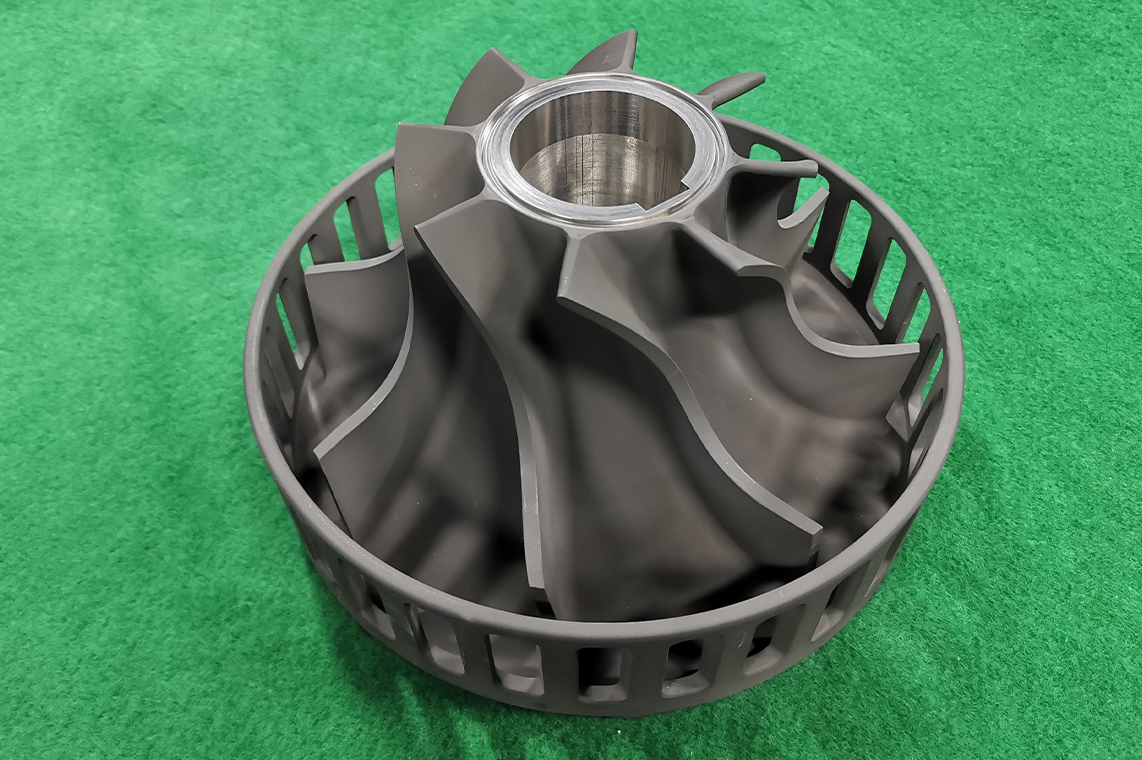
In 2026, fan, blower, turbo-machinery, and process equipment OEMs are under pressure to hit higher efficiency targets while reducing noise and vibration. For impellers, small geometry errors translate directly into performance losses: unstable airflow, lower pressure rise, imbalance, and early bearing wear. A precision cnc impeller built with 5 axis impeller machining helps control blade curvature, leading-edge shape, and hub transitions—key drivers of aerodynamic performance and repeatable balance.
Why Blade Geometry Controls Airflow and Efficiency
An impeller is an aerodynamic component first and a machined part second. Understanding the relationship between geometry and performance explains why machining accuracy matters more than most buyers initially expect.
How impeller blades generate flow:
Impeller blades impart velocity and pressure to the working fluid (air, gas, or liquid) by accelerating it from the blade leading edge to the trailing edge. The energy transfer efficiency depends on:
Flow angle match between incoming fluid velocity and blade inlet angle—mismatches cause incidence losses and flow separation
Blade thickness distribution and curvature—controlling boundary layer development and minimizing profile drag
Leading and trailing edge geometry—sharp or precisely radiused edges reduce separation and trailing-edge wake losses
Hub and shroud surface continuity—discontinuities in the hub transition or shroud profile trigger secondary flow structures that reduce efficiency and increase noise
Why geometry errors are performance losses:
A blade profile deviation of 0.1 mm at the leading edge can shift the incidence angle enough to cause partial flow separation at off-design conditions—visible as increased noise, reduced pressure rise, and efficiency drop. In high-RPM applications, the same deviation creates an imbalance force that loads bearings asymmetrically and reduces service life.
The practical implication: aerodynamic performance and mechanical reliability are both functions of machining accuracy, not just design intent. The best CFD-optimized blade profile delivers its predicted performance only if the machined geometry matches the design within the required tolerance band.
5 Axis Impeller Machining Specs: Geometry Features That Make or Break Performance
The specifications locked during the machining program definition determine whether a cnc impeller achieves its aerodynamic and mechanical targets in production—not just on the first article.
Why 5-axis machining is the right process for impellers:
Impeller blades are doubly curved surfaces—twisted from hub to tip with varying thickness and camber. A 5 axis impeller machining process allows the cutting tool to maintain a consistent, optimized orientation relative to the blade surface throughout the toolpath. This enables:
Continuous surface machining without re-indexing—eliminating step discontinuities between setups
Optimal tool engagement angle to maintain consistent chip load and surface finish across the full blade span
Access to tight blade passages that 3-axis or 3+2 approaches cannot reach without specialized tooling compromises
Reduced fixture changes—fewer setups means less accumulated positioning error between critical datums
In contrast, 3-axis machining of complex blade geometry requires multiple setups, with each re-fixturing introducing positional error that compounds across blade-to-blade consistency. The result is surface finish variation, blade profile deviation, and hub runout that is difficult to control within tight aerodynamic tolerance bands.
Critical geometry specs to lock:
Blade profile tolerance: Typically ±0.05–0.1 mm for aerodynamically critical blades; tighter for high-efficiency turbo stages. Profile tolerance controls the flow angle match and pressure distribution across the blade surface.
Leading and trailing edge radius: Leading edge radius controls incidence sensitivity and stall margin. Trailing edge radius affects wake thickness and tonal noise. Both require consistent tool orientation and fine finishing passes to hold accurately in production.
Blade thickness distribution: Thickness variation along the chord and span affects structural natural frequencies and resonance risk at operating RPM. Consistent wall thickness also affects impeller balance.
Hub and shroud concentricity and runout: Runout at the mounting bore relative to the blade datum directly determines residual imbalance. Typical targets for high-speed impellers: total indicator runout (TIR) ≤ 0.02 mm at the bore, ≤ 0.05 mm at the blade tip circle.
Surface finish: Blade surface Ra targets of 0.8–1.6 µm for most industrial impellers; Ra ≤ 0.4 µm for high-efficiency compressor stages. Surface roughness adds boundary layer friction losses that reduce stage efficiency measurably at high Reynolds numbers.
Tolerance summary table:
| Feature | Typical Target | Performance Impact |
|---|---|---|
| Blade profile | ±0.05–0.1 mm | Flow angle accuracy, efficiency |
| Leading edge radius | ±0.05 mm | Incidence sensitivity, noise |
| Bore runout (TIR) | ≤ 0.02 mm | Residual imbalance, bearing load |
| Blade tip runout | ≤ 0.05 mm | Tip clearance consistency |
| Blade surface finish | Ra 0.8–1.6 µm | Boundary layer drag, efficiency |
| Hub transition continuity | No step > 0.03 mm | Secondary flow suppression |
CNC Impeller Applications: Where 5-Axis Accuracy Delivers the Most Value
A cnc impeller with full 5-axis machining is not necessary for every application. The value of tighter geometry control scales with operating speed, efficiency sensitivity, and the cost of field failure.
Best-fit applications for 5-axis machining:
Industrial fans and blowers: High-volume airflow equipment where blade profile accuracy directly affects pressure rise, efficiency, and tonal noise. Energy cost at continuous duty makes efficiency gains highly valuable—a 1% efficiency improvement on a 100 kW fan running 8,000 hours/year saves approximately 800 kWh annually.
Vacuum system impellers: High-RPM vacuum impellers require tight runout control and blade balance to prevent vibration transmission to the vacuum chamber and connected equipment.
Turbocharger and supercharger compressor wheels: Automotive and industrial turbo compressor wheels operate at 100,000–300,000 RPM where blade profile tolerance and balance directly control compressor map width, surge margin, and wheel fatigue life.
Pump impellers (mixed-flow and axial): Hydraulic efficiency and cavitation resistance depend on blade leading-edge geometry and hub transition accuracy—both best controlled by 5 axis impeller machining.
Process gas compressors: API-standard compressor impellers for oil and gas, chemical, and power generation applications require tight blade profile control for stage efficiency and rotordynamic stability.
When simpler machining may be sufficient:
Low-speed ventilation fans with generous aerodynamic tolerance windows (±0.3 mm or broader)
High-volume consumer products where casting or forming is cost-justified and efficiency targets are modest
Components where structural function dominates over aerodynamic performance
How to Specify, Validate, and Produce a CNC Impeller at Scale
A structured workflow from design intent to locked production process is what separates a reliable cnc impeller program from one that produces variable results across batches.
Step 1 — Define operating point and performance targets Specify design flow rate, pressure rise, operating RPM, fluid properties (density, viscosity, temperature), and noise limits. These targets define which geometry tolerances are critical-to-quality (CTQ) and which are non-critical.
Step 2 — Provide CAD model and critical tolerance map Supply a complete 3D CAD model with a tolerance map identifying CTQ features: blade profile zones, leading and trailing edges, bore diameter and runout, surface finish zones. This allows the machining partner to build a targeted inspection plan rather than measuring everything.
Step 3 — Confirm machining strategy Define the datum scheme (primary and secondary datums for all operations), clamping plan (minimizing fixture-induced distortion), toolpath approach (finishing strategy for blade surfaces), and any special requirements (climb milling direction, coolant strategy for aluminum vs titanium).
Step 4 — First article inspection and validation CMM measurement or 3D scanning of blade profiles against CAD nominal. Runout checks at bore and blade tip circle. Surface finish measurement at leading edge, blade suction surface, and hub transition. Any out-of-tolerance features trigger toolpath revision—not acceptance with deviation.
Step 5 — Balance and assembly fit verification Dynamic balancing to ISO 1940 G1. or tighter for high-speed applications. Bore fit verification with mating shaft or adapter. Keyway or fastener feature check. Run a full assembly fit before approving the production lot.
Production scaling discipline:
Lock a "golden sample" with full inspection records as the production reference. Implement change control for any toolpath revision, cutting tool specification change, or material batch change. Re-inspect first article after any controlled change before releasing production.
How Precision Machining Lowers Lifecycle Cost
The machining cost premium of a high-precision 5 axis impeller machining program is typically recovered through multiple TCO levers over the equipment service life.
TCO drivers influenced by machining quality:
Efficiency and energy cost: Aerodynamic efficiency improvement from precise blade geometry has a direct, calculable energy cost impact. For continuous-duty equipment, even a 0.5–1.0% efficiency gain often recovers the machining premium within the first year of operation.
Bearing life from reduced vibration: Residual imbalance from poor runout control creates synchronous vibration forces that load bearings at every revolution. At 10,000 RPM, a 1 gram-millimeter imbalance generates a bearing load that reduces L10 bearing life by 30–50% compared to a properly balanced cnc impeller.
Reduced scrap and rework: Consistent CTQ control in a locked 5 axis impeller machining program reduces first-pass yield failures and rework labor compared to a process with wider tolerance variability.
Fewer field failures: An impeller that fails in service typically takes associated components (bearings, seals, sometimes shafts) with it. The total cost of a field failure—parts, labor, downtime, and customer relationship impact—typically dwarfs the cost of the impeller itself.
Maintenance considerations:
In erosive or corrosive media (dust-laden air, moist gas, chemical vapor), blade surface condition degrades over time. Schedule periodic dimensional checks at major service intervals to quantify blade profile wear against original tolerances.
Re-balance after any blade repair or surface restoration. Even small material removal changes the balance state.
For high-temperature applications, verify that thermal expansion behavior matches design assumptions—material selection and bore fit tolerance interact with operating temperature.
Conclusion
A high-performance cnc impeller is an aerodynamic component first and a machined part second—meaning geometry control directly determines airflow stability, pressure rise, noise level, and mechanical reliability. 5 axis impeller machining is the best available process for maintaining continuous blade surfaces, tight runout, and repeatable balance—particularly for high-RPM, high-efficiency, or continuous-duty applications where the cost of underperformance or failure is high.
The machining premium is consistently justified when efficiency gains, bearing life extension, and reduced field failure risk are calculated against the full equipment lifecycle.
Ready to discuss your impeller machining project?
Visit the cnc impeller product page and submit the following to receive a recommended machining approach and quotation:
Operating conditions: media (air, gas, liquid), target RPM, operating temperature, corrosion or erosion exposure
Quantity: prototype quantity and monthly or annual production forecast
Size and specs: impeller diameter, blade count, material (aluminum, steel, titanium, or other), bore and keyway details
Target metrics: efficiency and noise goals, runout and balance requirements, surface finish targets
Current problems: vibration, low efficiency, inconsistent airflow, premature bearing wear, high scrap or rework rate
FAQ
Q1: What is a CNC impeller?
A cnc impeller is an impeller manufactured by CNC machining to produce precise blade geometry, accurate datums, and consistent balance-related features—ensuring aerodynamic performance matches design intent in production.
Q2: 5 axis impeller machining vs. 3-axis or 3+2 machining—what is the practical difference?
5 axis impeller machining enables continuous tool orientation across complex blade surfaces in fewer setups, reducing stack-up error and improving surface continuity. 3-axis approaches require multiple re-fixturings that introduce positional error and surface discontinuities difficult to control within tight aerodynamic tolerances.
Q3: How does better impeller machining improve ROI?
ROI on a precision cnc impeller program typically comes from higher aerodynamic efficiency (lower energy cost), reduced vibration and longer bearing life, fewer production rejects, and better performance repeatability across production batches.
Q4: Do I need to redesign my impeller to use 5-axis machining?
Not always. Many existing designs can be machined as-is with 5 axis impeller machining. Small DFM adjustments—edge radii, tool access geometry, datum strategy—can reduce machining cost and improve consistency without changing the aerodynamic design intent.
Q5: What parameters are needed to quote a 5 axis impeller machining project?
Provide a CAD model or detailed drawings, material specification, impeller diameter and blade geometry, tolerance and surface finish requirements (especially runout and blade profiles), production quantity, and any balance standard or third-party inspection requirements for accurate 5 axis impeller machining scoping and quotation.