English
Smaller Tools, Higher Stakes
Robotic-assisted and minimally invasive surgery (MIS) demand instruments that are smaller, lighter, and more precise—while still meeting strict requirements for strength, surface finish, cleanliness, and repeatability. That's why 5-axis CNC machining for medical devices has become a core manufacturing method for complex micro components, intricate tool geometries, and multi-face parts that would otherwise require multiple setups or risky secondary operations.
In this blog, we'll map how CNC medical micro‑machining supports next-gen MIS tools and what OEMs should evaluate when choosing a machining partner.
Explore our CNC medical machining capabilities
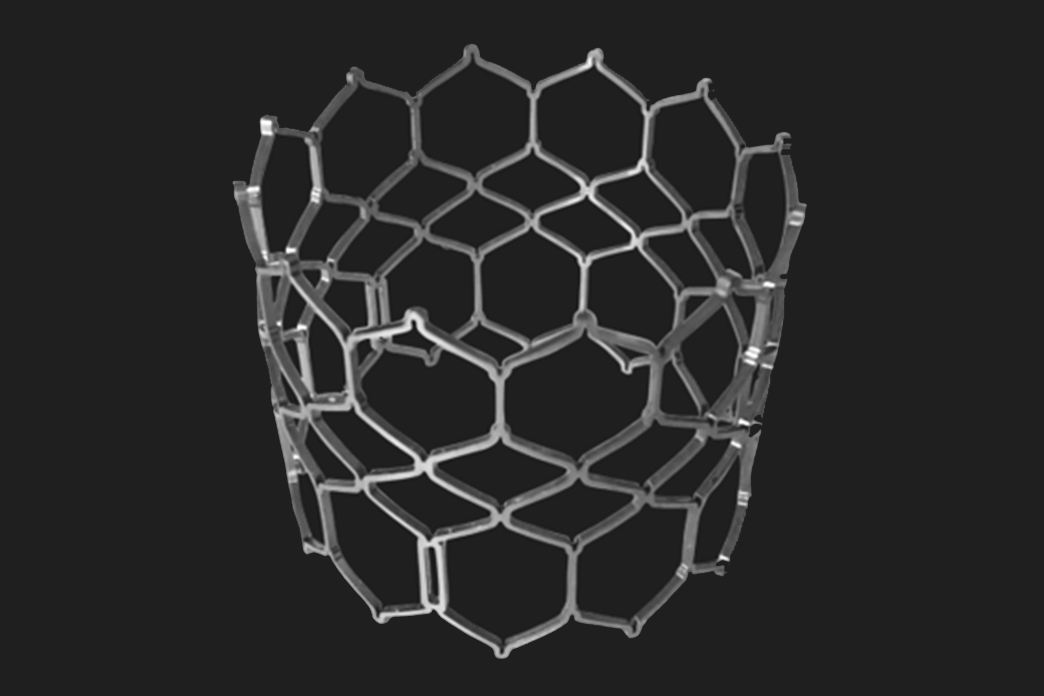
Precision micro-machined MIS instrument components produced via 5-axis CNC machining for medical devices — tight tolerances, controlled edge quality, and clean-room compatible handling.
5-Axis CNC Machining for Medical Devices: Why Robotic Surgery Parts Are Different
MIS and robotic surgical instruments aren't just small versions of conventional parts. They combine thin walls, high aspect ratios, tight tolerances, and multi-axis geometry in components that may be only a few millimeters across. Conventional 3-axis machining struggles with these demands—tool access is limited, re-fixturing introduces errors, and small parts are easily deformed by clamping forces.
5-axis CNC machining for medical devices addresses these challenges directly by tilting and rotating the spindle to reach complex geometry from a single setup.
Challenge → Machining Solution
| Design Challenge | 5-Axis Machining Solution |
|---|---|
| Deep narrow slots or channels | Controlled tool tilt maintains cutting angle without collision |
| Thin walls prone to deflection | Optimized toolpath reduces lateral cutting force |
| Multi-face geometry on small parts | Single-setup machining eliminates re-fixturing error |
| High aspect ratio features | Shorter tools at optimal angle reduce chatter |
| Tight positional tolerances across faces | One datum origin shared across all features |
For CNC medical component production, fewer setups means fewer error sources — and that directly translates to higher first-article pass rates and more consistent output across production batches.
5-Axis CNC Machining for Medical Devices Enables Micro Features in MIS Tools
The functional performance of a robotic or MIS instrument often depends on features measured in tenths of a millimeter: jaw serrations that grip tissue without tearing, hinge interfaces that articulate smoothly under load, fine channels that carry fluid or wire, and mating surfaces that close with repeatable precision.
Producing these features reliably requires more than a capable machine — it requires a process designed around the part's fragility.
Key Micro-Feature Considerations
Burr control: Any burr on a jaw edge, slot wall, or mating surface is a functional defect in a surgical instrument. Toolpath exit strategies, cutting direction selection, and planned deburring steps must all be defined before the first cut.
Edge quality: Surgical instrument edges — whether cutting or non-cutting — have specific geometry requirements. Uncontrolled edge breakout during machining can compromise both function and patient safety.
Fixturing for small parts: A fixture that grips too aggressively distorts the part. One that holds too lightly allows movement during cutting. For CNC medical micro components, custom low-force fixturing is often as important as the machining strategy itself.
Design-for-Machining Checklist for MIS Components
DFM CHECKLIST — CNC MEDICAL MICRO PARTS
─────────────────────────────────────────────────
□ Define minimum internal radii (matched to available end mill sizes)
□ Specify edge break requirements per surface (sharp / chamfer / radius)
□ Identify primary datum clearly on drawing
□ Flag thin-wall sections requiring special fixturing consideration
□ Confirm surface finish callouts per zone — not a single global value
□ Note any features requiring post-machining operations (honing, lapping)
─────────────────────────────────────────────────
5-Axis CNC Machining for Medical Devices: Material Choices and Surface Requirements
Material selection in MIS instruments is driven by a combination of mechanical performance, biocompatibility, corrosion resistance, and machinability. The right choice depends on the instrument's function, sterilization method, and whether the component is reusable or single-use.
Common Material Families
| Material | Typical Application | Key Machining Consideration |
|---|---|---|
| Stainless steel (300/400 series) | Jaws, shafts, housings | Work hardening; requires sharp tooling and controlled parameters |
| Titanium alloys | Structural components, handles | Low thermal conductivity; requires coolant management |
| Cobalt-chrome alloys | Wear-critical components | Hard and abrasive; shorter tool life; careful feed/speed selection |
| High-performance polymers (PEEK, Ultem) | Insulating components, single-use parts | Stress cracking risk; fixturing and heat management critical |
Surface and Post-Process Requirements
For 5-axis CNC machining for medical devices, the as-machined surface is rarely the final state. Functional surfaces typically require:
Passivation (stainless steel): Removes free iron, improves corrosion resistance
Anodizing (titanium): Adds a controlled oxide layer; can provide color-coding
Electropolishing: Reduces surface roughness and removes micro-burrs on complex geometry
Precision cleaning: Removes cutting fluid, chips, and particulates before packaging
Spec Box: What to Define Before Quoting
SURFACE AND MATERIAL SPEC SUMMARY
─────────────────────────────────────────────
Material:          Alloy designation + condition
Critical surfaces: List features with Ra / Rz requirements
Post-process:      Passivation / anodize / polish / coating
Sterilization:     EO / autoclave / gamma (affects material choice)
Reusable/single:   Affects finish durability requirements
─────────────────────────────────────────────
5-Axis CNC Machining for Medical Devices: Quality Control, Traceability, and Documentation
Medical OEMs operate in regulated environments where documentation is not optional. Every CNC medical component in a surgical instrument needs a traceable quality record — from raw material certification through machining, inspection, and shipping.
What Medical OEMs Typically Require
First Article Inspection (FAI) report: Full dimensional verification of all toleranced features on the first production sample
Material certifications: Traceable to heat/lot number with chemical and mechanical properties confirmed
Revision control: Clear documentation that the part was produced to the correct drawing revision
In-process inspection records: Evidence that critical features were checked during — not only after — machining
Inspection Methods for Micro Components
| Feature | Typical Inspection Method | When |
|---|---|---|
| Overall dimensions and hole positions | CMM (touch or scanning probe) | First article + periodic production |
| Micro slot width and depth | Optical measurement / vision system | First article |
| Surface finish | Contact profilometer | First article; per zone |
| Edge condition / burr check | Optical / visual at magnification | 100% or AQL sampling |
| Form (flatness, roundness) | CMM | First article + critical production checks |
Clean Handling and Packaging
Micro features damaged in packaging or handling represent wasted machining investment. Individual component protection (foam nests, separators, sealed bags) and clean-room compatible packaging should be specified before the first shipment — not discovered after a damaged delivery.
5-Axis CNC Machining for Medical Devices Partner Checklist: How to Source CNC Medical Components
Selecting a machining partner for CNC medical components involves more than confirming machine specifications. The partner's process discipline, communication quality, and ability to transition from prototype to production all affect your program schedule and quality outcomes.
Capability Questions
□ Do you have experience with micro tooling (sub-1mm end mills, micro drills)?
□ What is your smallest feature size demonstrated on production parts?
□ How do you fixture small or thin-wall parts to prevent distortion?
□ What 5-axis machine configurations do you run for small medical parts?
□ Can you demonstrate tolerance capability on features similar to ours?
Production Readiness Questions
□ How do you maintain process repeatability across production batches?
□ What is your capacity for prototype vs. production quantities?
□ How do you handle engineering changes after first article approval?
□ What is your typical prototype-to-production transition timeline?
Communication and DFM Support
□ Do you provide DFM feedback before programming begins?
□ Who is the technical point of contact during the project?
□ What documentation package do you deliver with first articles?
□ How are non-conformances communicated and dispositioned?
Explore our CNC medical machining capabilities and submit your requirements
Conclusion: Precision at the Micro Scale Is a Competitive Differentiator
As robotic surgery advances, MIS tools will continue to shrink in size while increasing in functional complexity. Manufacturing these instruments reliably—at prototype and production scale—requires a process built around the specific challenges of small, precise, multi-feature medical components.
5-axis CNC machining for medical devices reduces setups, controls tight geometries, and delivers consistent micro features that modern surgical systems depend on. For CNC medical OEMs, the machining partner you choose is as important as the design itself.
Frequently Asked Questions
1. Why is 5-axis CNC machining for medical devices preferred for MIS and robotic surgery components?
MIS and robotic instruments combine small size, complex multi-face geometry, tight tolerances, and thin walls that are difficult or impossible to machine reliably with conventional 3-axis methods. 5-axis CNC machining for medical devices allows the spindle to approach features from multiple angles in a single clamping — eliminating re-fixturing errors, improving positional accuracy across faces, and enabling shorter, stiffer tooling that reduces deflection on delicate features. For surgical instruments where dimensional failures have direct patient safety implications, the process stability of 5-axis single-setup machining is a significant advantage.
2. What tolerances and surface finishes are typical for micro-machined MIS tool parts?
Tolerance and finish requirements vary by feature and function. Mating and hinge interfaces typically require tight positional and form tolerances to ensure smooth articulation and reliable closure. Cutting edges and jaw surfaces have specific geometry callouts that affect tissue interaction. Surface finish requirements depend on the function of the surface — sliding interfaces need low Ra values to minimize friction and wear, while external surfaces may have less stringent finish requirements. The best practice is to define tolerances and finish callouts per feature zone rather than applying a single global specification to the entire part.
3. Which materials are commonly CNC-machined for medical devices (stainless, titanium, polymers)?
The most common materials in CNC medical instrument components are:
Stainless steel (various grades) for general structural and functional components
Titanium alloys where weight reduction or specific biocompatibility requirements apply
Cobalt-chrome for wear-critical or high-strength applications
High-performance polymers (PEEK, Ultem) for insulating components or single-use instrument parts
Material selection is driven by function, sterilization method, reusability, and regulatory requirements — not machining convenience alone.
4. How do manufacturers control burrs and protect micro edges during machining and packing?
Burr control starts in the CAM programming phase — tool exit strategies, cutting direction, and operation sequencing are all planned to minimize burr formation at critical edges. After machining, a combination of mechanical deburring, electropolishing, or precision cleaning removes residual burrs. Edge geometry is then verified optically or under magnification. For packaging, individual components are separated by foam nests or film separators to prevent contact between micro features during transit — protecting edge geometry that may have taken significant machining investment to produce.
5. What information should I provide for quoting CNC medical parts (files, quantity, finish, inspection needs)?
To receive an accurate quote and meaningful DFM feedback, provide:
3D model in STEP format for CAM and fixture planning
2D drawings in PDF with all toleranced dimensions and GD&T callouts
Material specification — alloy designation and condition
Surface finish requirements — per feature zone (Ra/Rz values)
Post-processing requirements — passivation, anodizing, electropolishing, cleaning
Prototype quantity and production forecast — affects fixturing investment and process planning
Inspection requirements — FAI report format, specific measurement methods, documentation needs
Target delivery date for prototypes