English
Scalability Is About More Than Picking the "Best" Process
Scaling production isn't only about choosing the most capable casting method—it's about matching volume, tolerance, surface finish, tooling budget, and lead time to your specific business model. In many real-world programs, cast parts still require secondary machining to hit critical dimensions, which is where cnc die casting workflows (die casting combined with precision CNC finishing) bridge the gap between high output and tight specs.
This guide compares die casting, sand casting, and investment casting through a scalability lens, then explains how to plan machining and sourcing to avoid bottlenecks as volumes grow.
See our die casting + CNC capability overview
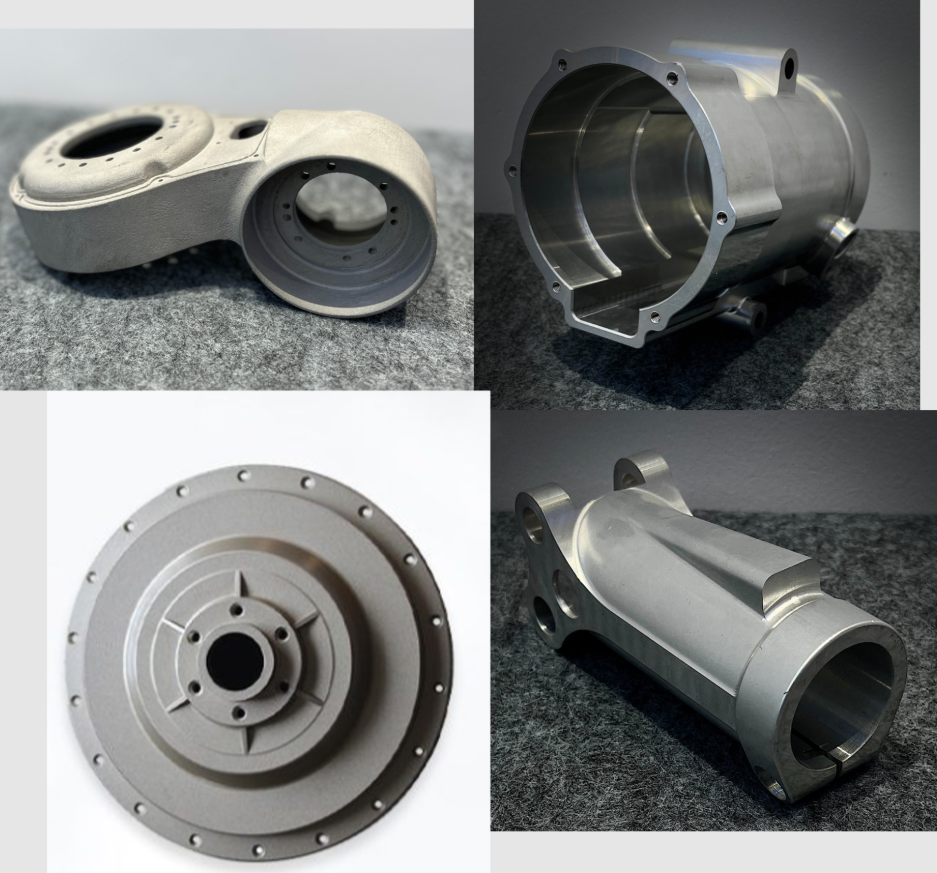
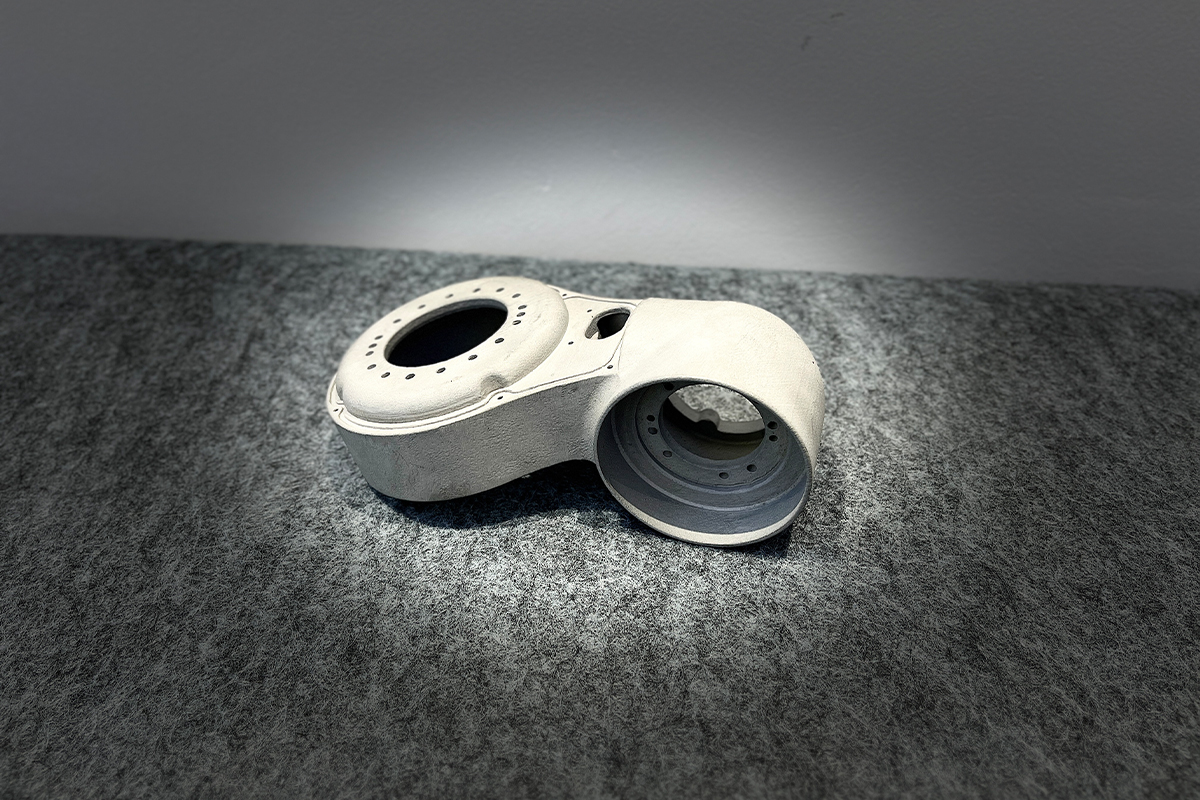
Precision die-cast components with CNC-machined critical surfaces — combining high-volume casting output with tight dimensional control.
CNC Die Casting and Scalability Basics: What "Scalable" Really Means
Before comparing processes, it helps to define what scalability actually means in a manufacturing context. "Scalable" is not simply "fast" or "cheap"—it describes how well a process maintains quality and economics as volume increases.
Key Scalability KPIs
| KPI | What to Measure |
|---|---|
| Unit cost curve | How much does cost-per-part drop as volume doubles? |
| Cycle time | How long does each part take to produce? |
| Yield and scrap rate | What percentage of parts pass first-time quality checks? |
| Repeatability | Does part geometry stay consistent across thousands of cycles? |
| Supply stability | Can the process support demand spikes without long lead times? |
Why Secondary Machining Is Often the Deciding Factor
Most casting processes—regardless of type—cannot hold the tolerances required for functional surfaces like sealing faces, bearing bores, or precision mounting datums. This means the real scalability question is rarely "which casting process is best?" but rather: which casting process + machining combination delivers the best unit economics at my target volume?
CNC die casting workflows address this by pairing high-output casting cycles with targeted CNC finishing on critical features only—keeping machining time short while ensuring functional dimensions are met.
CNC Die Casting vs. Sand Casting: When High Volume Meets Post-Machining Reality
These two processes represent opposite ends of the tooling investment spectrum, and understanding their trade-offs is the foundation of any scalability decision.
Die Casting Strengths for Scaling
Fast cycle times: A die casting shot cycle is measured in seconds for most aluminum parts
Good as-cast repeatability: The rigid steel die produces consistent part geometry shot after shot
Thin walls and good surface finish: Relative to sand casting, die casting produces cleaner surfaces that require less post-processing
Sand Casting Strengths — and Limitations
Low tooling cost: Pattern tooling is inexpensive compared to a hardened die casting mold
Large part capability: Sand casting can produce much larger parts than most die casting machines accommodate
Design flexibility: Patterns can be modified relatively cheaply for design changes
The limitation is process variability. Sand molds are single-use. Dimensional variation between parts is wider. Surface finish is rougher. For parts requiring tight bore tolerances or flat sealing surfaces, sand castings typically need more aggressive CNC finishing than equivalent die castings.
Where CNC Finishing Is Commonly Required in Both
Regardless of which process produces the casting, CNC machining is almost always needed for:
Sealing surfaces (flatness and finish)
Bore diameters (roundness and diameter tolerance)
Threaded hole locations (positional accuracy)
Primary datum faces used for downstream assembly
Decision Triggers: Die Casting vs. Sand Casting
CHOOSE DIE CASTING WHEN:
□ Annual volume exceeds several thousand parts
□ Part size fits within machine envelope
□ Consistent dimensional repeatability is required
□ Thin wall sections are needed
□ Long production run justifies tooling investment

CHOOSE SAND CASTING WHEN:
□ Volumes are low or design is still changing
□ Part is too large for die casting
□ Tooling budget is constrained
□ Material requires a process die casting can't support
□ Prototyping or bridge production before a die is committed
CNC Die Casting vs. Investment Casting: Precision, Complexity, and Throughput Trade-Offs
Investment casting (lost-wax process) is often positioned as the "high precision" alternative to die casting, but the comparison is more nuanced than that when throughput and scalability are the priority.
Investment Casting Strengths
Complex geometry: Undercuts, internal passages, and shapes that would require expensive die actions in die casting can sometimes be cast directly
Good as-cast surface finish: Investment casting typically produces better as-cast finish than sand casting
Material flexibility: Works with a wider range of alloys including some that are difficult to die cast
Die Casting Strengths at Scale
Speed: Die casting cycle times are significantly faster than investment casting, which involves wax pattern creation, ceramic shell building, burnout, and pour — a multi-day process per batch
Volume economics: At high volumes, die casting unit costs drop more steeply due to fast cycles and reusable tooling
CNC integration: The consistent geometry of die castings makes CNC fixturing and machining more predictable
Process Selection Matrix
| High Volume | Medium Volume | Low Volume | |
|---|---|---|---|
| High Complexity | Die casting + CNC | Investment casting | Investment casting |
| Medium Complexity | Die casting + CNC | Die casting or investment | Sand casting |
| Low Complexity | Die casting | Sand casting | Sand casting |
The CNC Finishing Role in Both Processes
Even investment castings — despite their better as-cast accuracy — typically require CNC finishing on functional surfaces. The key difference is that investment castings may need less material removal, while die castings often have more consistent datum faces that make CNC fixturing easier and faster. For cnc die casting workflows specifically, the repeatability of the cast datum means shorter setup times and more predictable machining cycles across large production runs.
CNC Die Casting Cost Model: Tooling, Unit Price, and Lead Time
Understanding the economics of cnc die casting at different volume levels is essential for making a scalable process decision.
The Cost-Per-Part Formula
TOTAL COST PER PART =
  (Tooling Investment ÷ Total Parts Produced)
  + Casting Unit Cost
  + CNC Machining Cost
  + Inspection and QA Cost
  + Scrap / Rework Allowance
The tooling amortization component is the key variable. At low volumes, the tooling cost per part is high—making die casting uneconomical. As volume increases, tooling cost per part drops rapidly, and the fast cycle time and low scrap rate of die casting produce increasingly favorable unit economics compared to sand or investment casting.
Lead Time Components to Plan For
| Stage | Lead Time Driver | Risk Control |
|---|---|---|
| Tooling build | Die complexity, surface treatment | Confirm design freeze before tooling release |
| First article / sampling | Dimensional validation, revision iterations | Budget 2–3 sampling rounds in the schedule |
| CNC machining capacity | Machine availability, fixturing lead time | Confirm machining is in-house or committed |
| Inspection and reporting | CMM availability, report format | Align report requirements before production |
| Ramp to production | Yield stabilization, operator learning | Plan a pilot run before full rate |
Avoiding Scale Bottlenecks
The most common bottlenecks when scaling cnc die casting production are not in the die casting cell itself — they are in the downstream machining and inspection steps. A die that cycles every 30 seconds can outpace a CNC cell in hours if machining capacity isn't planned to match casting output. Building a realistic capacity model that covers casting rate, machining cycle time, and inspection throughput before committing to delivery timelines prevents the most common scale-up surprises.
CNC Die Casting Supplier Checklist: What to Ask Before You Commit
Selecting the right manufacturing partner for a cnc die casting program affects not just the first delivery — but your ability to scale without disruption.
Capability Questions
□ Do you offer mold design support, or do you require a customer-supplied tool?
□ Is CNC machining performed in-house or through a dedicated partner?
□ What is your maximum casting envelope and shot weight?
□ What alloys do you regularly process?
□ What tolerance capability can you demonstrate on machined features?
Quality Control Questions
□ Do you provide first article dimensional reports?
□ What inspection equipment do you operate? (CMM, 3D scan, profilometer)
□ How do you document and disposition porosity or warpage defects?
□ What traceability do you maintain from material cert to finished part?
□ What cosmetic defect standards apply to your castings?
Scale Readiness Questions
□ What is your current capacity utilization, and how do you handle volume ramps?
□ Do you maintain spare tooling or have a defined tool repair process?
□ What is your second-source strategy if primary capacity is constrained?
□ How do you manage engineering changes once a die is in production?
See our die casting + CNC capability overview and submit your requirements
Conclusion: The Most Scalable Process Is the One That Fits Your Volume, Tolerance, and Timeline
Die casting, sand casting, and investment casting each have a volume range and geometry profile where they deliver the best economics. There is no universally correct answer—only the right match for your specific part, volume, and functional requirements.
For most functional components that need to scale efficiently, the winning strategy is a realistic casting + machining plan: use the casting process that matches your volume and geometry, then apply targeted CNC finishing where dimensions matter most. That is exactly what a well-structured cnc die casting workflow delivers—scalable output without sacrificing dimensional control.
Frequently Asked Questions
1. At what volume does die casting become more scalable than sand casting?
There is no single universal threshold, but the general guidance is that die casting becomes economically favorable when annual volumes are high enough to amortize the tooling investment over a meaningful number of parts. Sand casting tooling costs a fraction of a die casting mold, making it the better choice for low volumes, prototypes, or parts still in design iteration. As volume grows and the tooling cost per part drops, die casting's faster cycle time and better repeatability produce lower total unit costs. The crossover point depends on part size, complexity, and the machining requirements of the specific design.
2. Why do die-cast parts still need CNC die casting (secondary machining)?
Die casting produces consistent near-net-shape geometry, but the as-cast tolerances are typically not tight enough for functional surfaces like bearing bores, sealing faces, precision mounting datums, or threaded hole locations. These features require CNC machining to achieve the dimensional accuracy needed for reliable assembly and performance. The cnc die casting workflow combines the speed and volume economics of die casting with targeted CNC finishing on only the features that require it — keeping machining time short while meeting functional requirements.
3. When is investment casting a better choice than die casting?
Investment casting is generally the better choice when the part has complex internal geometry (undercuts, thin curved walls, internal passages) that would require expensive multi-action die tooling, when the material is one that cannot be die cast (certain steels, superalloys, titanium), or when volumes are moderate and the design complexity justifies the longer per-batch process time. At high volumes with simpler geometry, die casting typically offers better cycle economics. The right answer depends on geometry complexity, material requirements, and volume together — not any single factor alone.
4. How do porosity and warpage affect CNC machining after casting?
Porosity creates two risks in post-machining: subsurface voids exposed by machining can cause pressure leak failures on sealed housings, and localized porosity near critical surfaces can cause dimensional instability as material is removed. Warpage — common in thin-section castings that cool non-uniformly — creates datum instability that makes fixturing for CNC inconsistent. Both defects require upstream process controls (shot parameters, die temperature, cooling control) rather than downstream correction. When evaluating a cnc die casting supplier, ask specifically how porosity and warpage are monitored and dispositioned before parts reach the machining cell.
5. What information should I send for an accurate quote (volume, alloy, tolerance, surface finish)?
For the most accurate and complete quote, provide:
Part drawing (PDF) with all dimensions, tolerances, and GD&T callouts
3D model (STEP) for machining and tooling review
Target annual volume and any ramp schedule
Alloy specification — generic (e.g., aluminum die casting alloy) or specific designation
Critical tolerances — identify which features are functionally critical vs. general
Surface finish requirements — per feature zone, not a single global callout
Post-machining requirements — any coatings, pressure testing, or assembly interfaces
Required delivery timeline for first articles and production
Providing complete data upfront allows the supplier to assess both the casting and machining requirements together — which is the only way to give an accurate total cost and lead time.