English
Precision machining does not always end when the CNC tool leaves the workpiece. For some components, the final few microns of material removal are what determine whether a surface meets its dimensional, flatness or finish requirements. This is where grinding becomes useful, particularly when a machined surface needs tighter control than milling or turning can consistently provide.
Rather than replacing CNC machining, grinding machining typically works as a complementary finishing process. CNC operations establish the main geometry and remove most of the material, while grinding selectively refines critical surfaces. Knowing when that extra operation is justified—and when it simply adds cost—helps manufacturers build a more efficient precision machining process.
What Grinding Machining Is Designed to Do
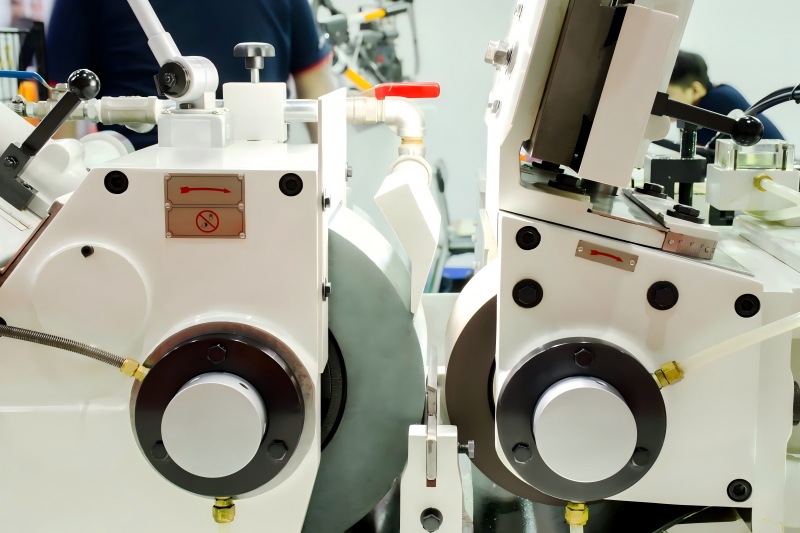
Grinding removes small amounts of material using an abrasive wheel or related tool. Unlike milling and turning, which are generally used to create the main geometry, grinding is primarily a finishing process for improving dimensional accuracy and surface quality.
The abrasive wheel contains many cutting points that gradually remove material from the workpiece. This makes grinding suitable when a component requires tight size control, improved surface texture or specific geometric characteristics such as flatness and parallelism.
Because grinding normally removes only a small amount of material, the previous CNC operation must leave a suitable and consistent stock allowance. Good process planning therefore considers machining and grinding as connected operations rather than completely separate steps.
Why Grinding Is Used After CNC Machining
CNC milling and turning are efficient for removing larger amounts of material and producing complex features. However, some critical surfaces may require tighter tolerances or better finishes than conventional cutting can economically deliver.
Grinding can refine these surfaces after roughing and semi-finishing. For example, CNC milling can establish the basic shape of a component, while surface grinding can bring a critical face to a tighter thickness or flatness requirement.
This combination allows each process to perform its most suitable task. CNC machining handles pockets, contours, holes and complex geometry, while grinding focuses on surfaces where additional precision provides functional value.
Surface Grinding and Other Grinding Operations
Surface grinding is commonly used for flat faces where flatness, parallelism, thickness or surface finish must be controlled. It is particularly useful for components that require accurate mating or reference surfaces.
Cylindrical grinding is designed for round external or internal surfaces and can control characteristics such as diameter, roundness and surface finish. Other specialized grinding methods can be used for threads, gears and specific profiles.
The process should therefore be selected according to the actual functional requirement. A flat precision face may require surface grinding, while a shaft with a tight diameter and roundness specification may be better suited to cylindrical grinding.
How Material and Tolerance Influence the Process
Material has an important influence on grinding. Hardened steels, tool steels and other difficult-to-machine materials may benefit from abrasive finishing, particularly after heat treatment.
Tolerance requirements are equally important. A general-purpose component may not require grinding, while a precision mating surface may justify the additional operation. Stock allowance must also be controlled because inconsistent grinding stock can make it difficult to achieve the target dimensions.
Heat is another consideration. Grinding generates thermal energy, and excessive heat can affect dimensional stability or damage sensitive surfaces. Wheel selection, cutting parameters, coolant and process control should therefore be matched to the material and tolerance requirements.
Zhihui Precision's grinding machining capability can be integrated with CNC operations when a component requires both complex machining and precision finishing. This allows grinding to be applied selectively where it provides a measurable improvement.
Inspection Is Part of Grinding Quality
Grinding quality needs to be verified through measurements that match the drawing requirements. Depending on the part, inspection may include dimensional accuracy, flatness, parallelism, roundness and surface roughness.
Tight tolerances also make measurement conditions important. Temperature, equipment accuracy, workpiece handling and surface cleanliness can influence results. For critical components, inspection should therefore be considered part of the overall grinding process rather than simply a final pass-or-fail check.
Inspection data can also provide useful feedback for process improvement. If dimensions consistently trend toward a tolerance limit, the grinding parameters or preceding machining process may need adjustment.
When to Add Grinding to a CNC Process
Grinding is most valuable when the functional requirements justify the additional operation. If a surface requires tighter dimensional control, improved flatness or a specific surface roughness that milling or turning cannot reliably achieve, grinding may be the appropriate finishing step.
However, not every precision part needs grinding. If conventional CNC machining can consistently meet the required specifications, adding another process may only increase production time and cost.
The decision should consider tolerance, surface finish, material, stock allowance, inspection requirements and production volume together. A selective approach usually provides better results than treating grinding as a standard final operation for every machined component.
Frequently Asked Questions
1. What is grinding machining used for?
It is used for precision finishing, dimensional control and improved surface quality.
2. What is surface grinding?
It is mainly used to improve flatness, parallelism and finish on flat surfaces.
3. Is grinding better than CNC machining?
Not always. CNC machining creates the main geometry, while grinding refines critical surfaces.
4. When should grinding be added after CNC machining?
When milling or turning cannot reliably meet the required tolerance or surface finish.
5. What materials can be ground?
Many metals can be ground, including hardened steel and tool steel.
6. Does every precision part need grinding?
No. Grinding should be used when the part's requirements justify the additional operation.
The role of grinding in precision manufacturing is not simply to make a part “more accurate.” Its value comes from solving specific dimensional, geometric or surface-finish requirements that other machining processes may not meet efficiently. By defining those requirements first, manufacturers can determine whether surface grinding or another grinding process is necessary.
A well-planned combination of CNC machining, selective grinding machining and appropriate inspection can achieve the required precision without adding unnecessary production steps. The result is a process that balances accuracy, surface quality, efficiency and cost according to the actual needs of the component.