English
In modern high-precision manufacturing, the capability to produce intricate, tight-tolerance components efficiently is what separates market leaders from their competitors. The introduction of multi-axis machining has fundamentally shifted production paradigms. At the center of this evolution is the 5-axis CNC machine, an engineering marvel that offers unprecedented geometric freedom.
For global industrial manufacturers, understanding the mechanics, applications, and strategic financial benefits of this technology is essential for scaling B2B production.
1. What Are the 5 Axis on a CNC Machine?
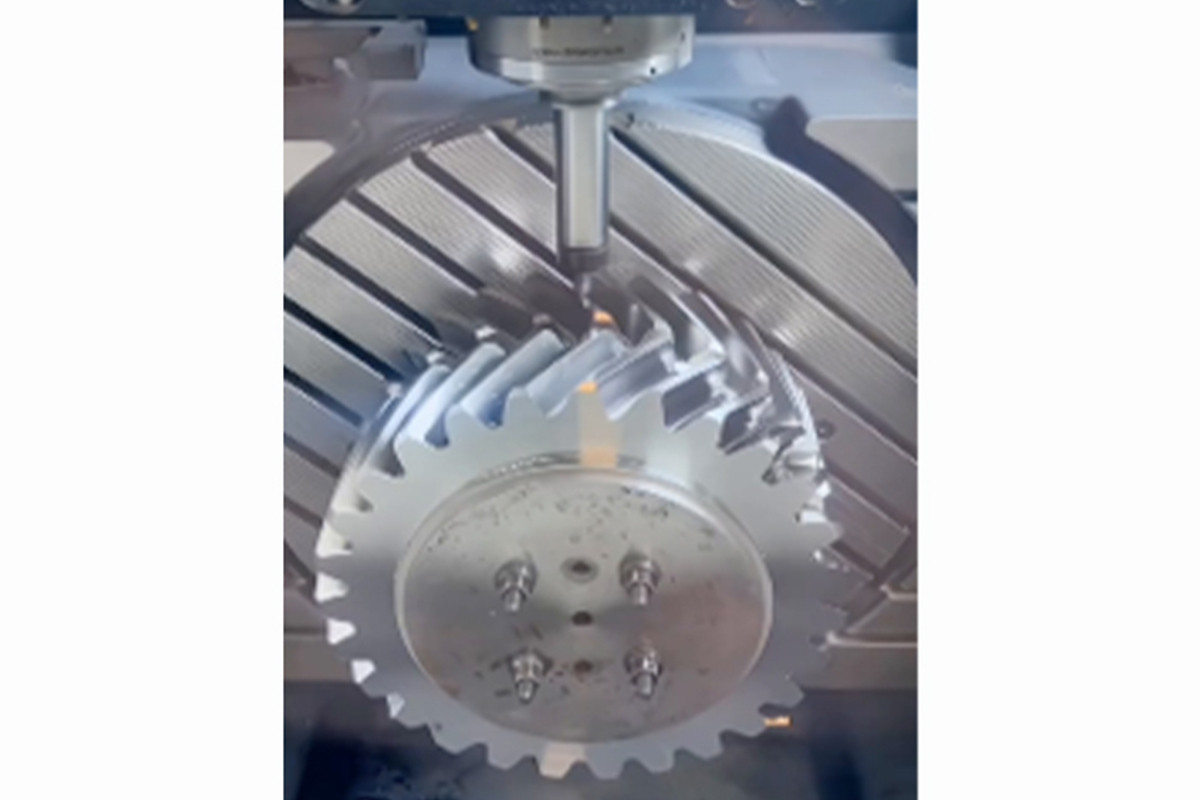
When engineers ask what is 5 Axis CNC machine mechanics in a workshop, the answer lies in the total directional movement. A 5-axis CNC machine operates on three linear axes (X, Y, and Z) and two rotational axes (selected from A, B, or C) to maneuver a cutting tool or workpiece in five distinct directions simultaneously. To visualize how a 5-axis machine achieves this complex motion, it helps to break down the directional coordinates defined by international standards like ISO 841:
Linear Axes (X, Y, Z): These govern movement along three traditional straight lines. X controls left-to-right movement, Y moves front-to-back, and Z moves up-and-down.
Rotational Axes (A, B, C): These axes rotate around the linear paths. The A-axis rotates around the X-axis, the B-axis rotates around the Y-axis, and the C-axis rotates around the Z-axis.
By utilizing any combination of two rotational axes alongside the three linear ones, a 5-axis machine can approach a workpiece from practically any angle, unlocking intricate geometries that are impossible with standard machinery.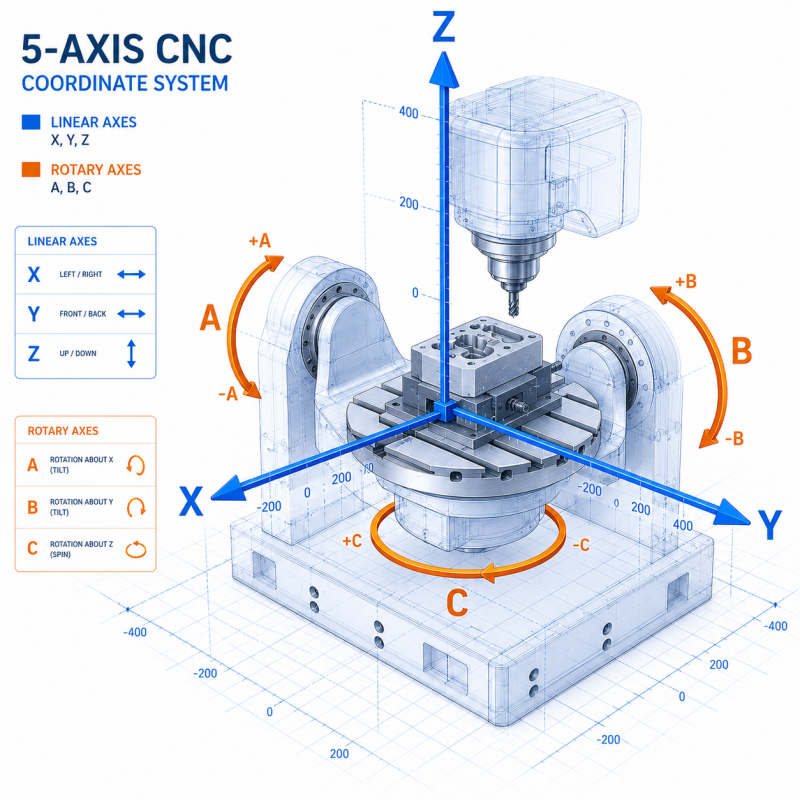
2. Working Principle of a 5 Axis CNC Machine
The working principle of a 5-axis CNC machine relies on synchronous computer numerical control to coordinate three linear movements and two rotational movements, maintaining constant tool contact and alignment relative to complex part geometries. The machine executes these synchronized operations using a pre-programmed script generated via Computer-Aided Manufacturing (CAM) software.The CNC controller parses this G-code data to drive high-precision servomotors simultaneously. A critical underlying technology in this process is RTCP (Rotational Tool Center Point), sometimes referred to as Tool Center Point Management (TCPM). Without RTCP, an operator would have to manually calculate the offset distances caused by pivot movements of the rotational axes. With RTCP enabled, the machine controller automatically monitors the precise position of the tool tip relative to the workpiece coordinate system in real time, compensating for rotational variances instantaneously to preserve cutting accuracy.
3. What Sets 5 Axis CNC Machine Apart from Other Types of CNC Machines?
To truly understand what is 5 Axis CNC milling machine technology's edge, you must compare it directly to older 3-axis and 4-axis systems. A 5-axis CNC machine is distinguished from 3-axis and 4-axis systems by its unique capability to machine complex, organic, and deeply undercut shapes in a single, continuous setup without manual part re-fixturing. The primary point of differentiation lies in setup efficiency and geometric capability. Traditional 3-axis milling machines operate purely along flat vectors, requiring parts with multiple angled features to be manually stopped, un-clamped, flipped, and re-clamped multiple times. While 4-axis machines introduce a single rotary axis (usually a trunnion or indexer), they are still constrained when dealing with compound angles.The table below illustrates how 5-axis configurations fundamentally outperform traditional methods across critical operational metrics:
| Operational Metric | 3-Axis Milling | 4-Axis Milling | Simultaneous 5-Axis Machining |
|---|---|---|---|
| Number of Setups Required | High (3 to 6 setups) | Moderate (2 to 4 setups) | Minimal (1 to 2 setups) |
| Typical Positional Tolerances | +/- 0.025 mm | +/- 0.015 mm | +/- 0.005 mm or tighter |
| Complex Geometry Capability | Poor (Flat planes only) | Moderate (Cylindrical engraving) | Exceptional (Organic undercuts/blades) |
| Average Setup Time Reduction | Baseline (0%) | 20% to 35% reduction | Up to 75% reduction |
| Tool Longevity & Deflection | High deflection on deep walls | Moderate deflection | Lowest deflection via short tooling |
To discover how high-performance multi-axis setups translate into reliable production capacity for your contract orders, browse our full custom machining capacities on our 5-Axis Machining Page.
4. Key Applications of 5 Axis CNC Machine
Key applications of
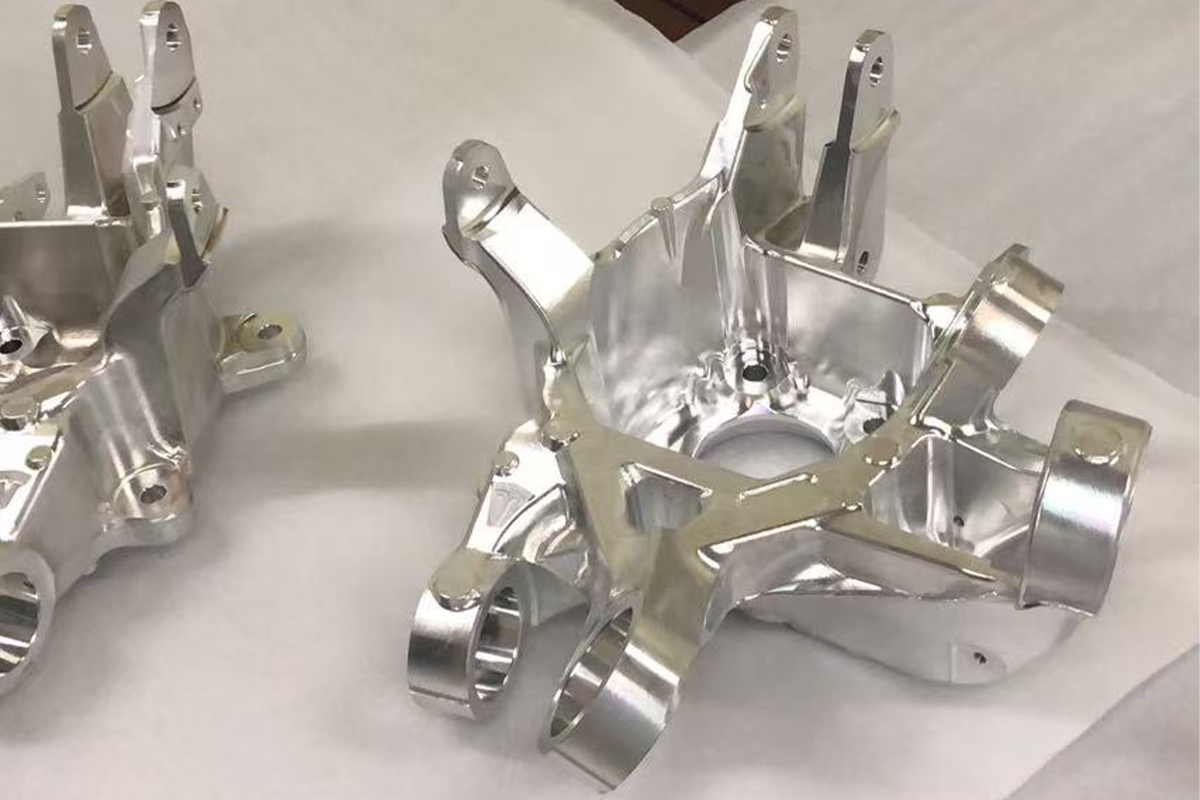
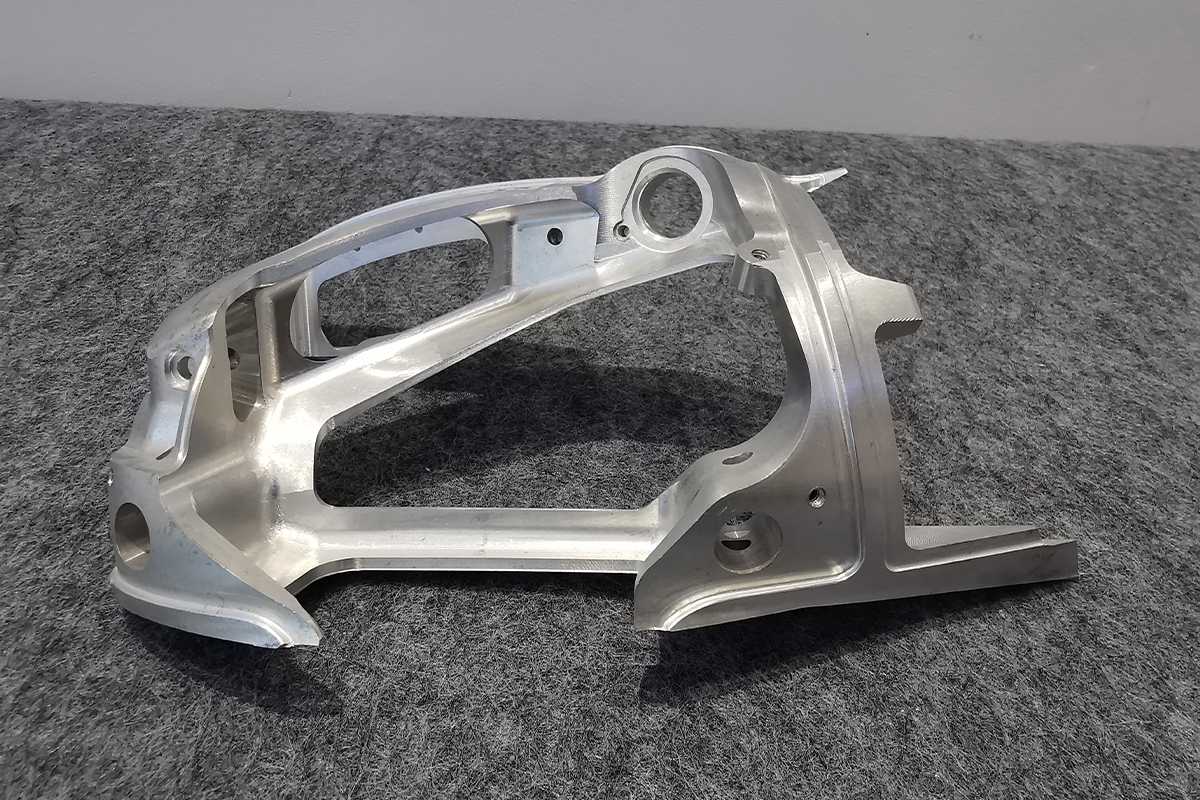
Aerospace Manufacturing: Components like multi-bladed impellers, turbine fans, and complex structural bulkheads feature sweeping, fluid curves. 5-axis machining ensures these components are milled from a single solid block of titanium or Inconel, preserving structural integrity.
Medical Orthopedics: Artificial joint prostheses, bone plates, and complex dental components require organic contours that mirror human anatomy. Multi-axis machinery achieves smooth surface transitions with exceptional dimensional fidelity.
Automotive Engine & EV Development: From prototyping high-performance engine blocks to manufacturing complex lightweight structural castings for electric vehicles (EVs), multi-axis systems accelerate production turnaround.
Die and Mold Making: Deep cavities, steep walls, and complex core patterns can be milled efficiently using short, rigid cutting tool configurations, resulting in flawless mold finishes.
5. Advantages of 5 Axis CNC Machining in Precision Manufacturing
The primary advantages of 5-axis CNC machining include drastically reduced setup times, superior surface finishes, extended tool longevity, and unparalleled dimensional accuracy on complex geometries. Deploying a multi-axis strategy directly impacts workshop profitability and output quality through several key mechanical benefits:
Done-in-One Setup Efficiency
By accessing multiple faces of a part in a single setup, workshops drastically eliminate the cumulative positioning errors that naturally occur during manual part re-fixturing. This single-setup approach guarantees that interrelated dimensional traits remain perfectly true to one another.
Superior Surface Finish Quality
By tilting the cutting tool or the workpiece, a 5-axis machine can maintain the optimal cutting angle and constant chip load at the tool tip. This prevents the center of a ball nose end mill—which has zero cutting velocity—from dragging across the material. The resulting surface finishes are significantly smoother, often eliminating the need for manual polishing.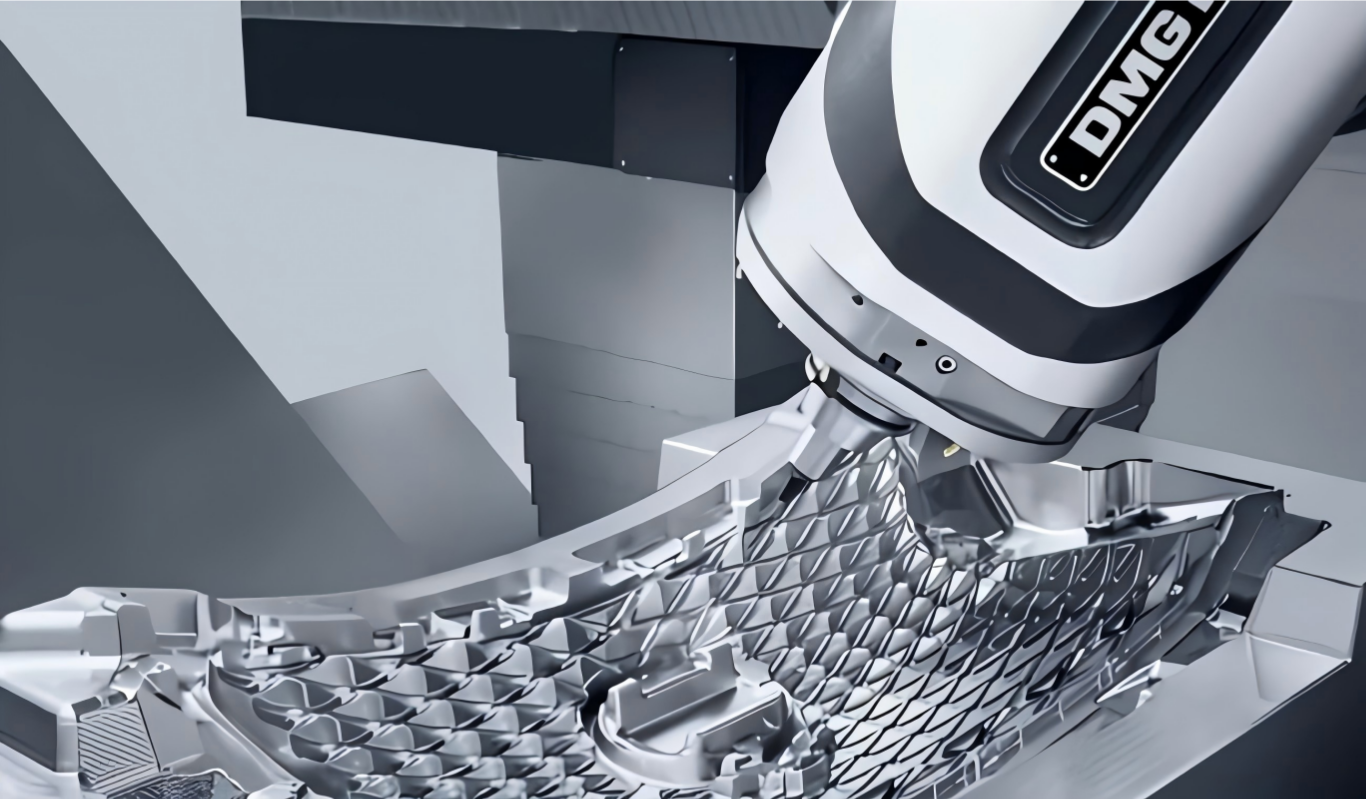
Extended Tool Longevity
When machining deep cavities on traditional 3-axis equipment, long, slender tools must be used, which are highly susceptible to tool deflection and chatter. According to manufacturing studies published by national metrology frameworks like the NIST Manufacturing Publications, reducing tool chatter is directly correlated with prolonged tool life. 5-axis setups allow operators to orient the part so that shorter, more rigid cutting tools can be utilized, enabling higher feeds and speeds while reducing tool wear.
6. Limitations of 5 Axis CNC Machining
The limitations of 5-axis CNC machining involve significantly higher initial capital expenditure, complex CAM programming requirements, specialized operator training, and increased susceptibility to severe collision damage if improperly simulated. While the advantages are substantial, a realistic industrial assessment requires reviewing these structural challenges:
Higher Capital Investment: A commercial-grade 5-axis machining center typically requires an initial investment that is 2 to 3 times higher than a standard 3-axis mill.
Advanced Programming Overhead: Writing and verifying simultaneous multi-axis toolpaths demands specialized CAM software modules and post-processors tailored to the specific machine's kinematics.
Skill Requirements for Personnel: Operators and engineers must possess a deep understanding of spatial geometry, advanced workholding, and predictive macro-programming.
To bypass these high learning curves and capital barriers, global brands partner with custom manufacturing vendors like Zhihui Precision. We absorb the programming and operational overhead, delivering ready-to-assemble parts. Learn more about our manufacturing background on our Company Profile page.
7. How to Select the Right 5 Axis CNC Machine for Your Products?
Selecting the right 5-axis CNC machine requires an analytical evaluation of your part sizes, material hardness, required rotational configurations (trunnion table vs. swivel head), and specific controller compatibility. Choosing an optimal configuration requires evaluating several fundamental criteria:
Kinematic Configuration: Trunnion vs. Swivel Head
Trunnion Style (Table-Table): The rotational axes are located entirely within the working table. This setup offers superior torque and structural rigidity, making it ideal for compact, heavy components requiring high material removal rates.
Swivel Head Style (Head-Head / Head-Table): The rotational axes are embedded within the spindle head housing. Because the workpiece remains stationary on a fixed table, this configuration is preferred for extra-long, heavy, or large parts that would cause gravitational deflection if tilted on a trunnion.
Spindle Power and Speed Specifications
For milling non-ferrous metals like aluminum alloys, high-speed spindles spinning at 18,000 to 24,000 RPM maximize throughput. Conversely, tough aerospace alloys like titanium require heavy-duty, high-torque spindles operating at lower RPM ranges (6,000 text to 12,000 RPM) to withstand heavy cutting forces.
CNC Controller Ecosystem
Ensure the machine uses an open-architecture, industry-standard controller ecosystem. These architectures support high-speed look-ahead blocks and advanced toolpath smoothing loops, which are critical for smooth simultaneous motion.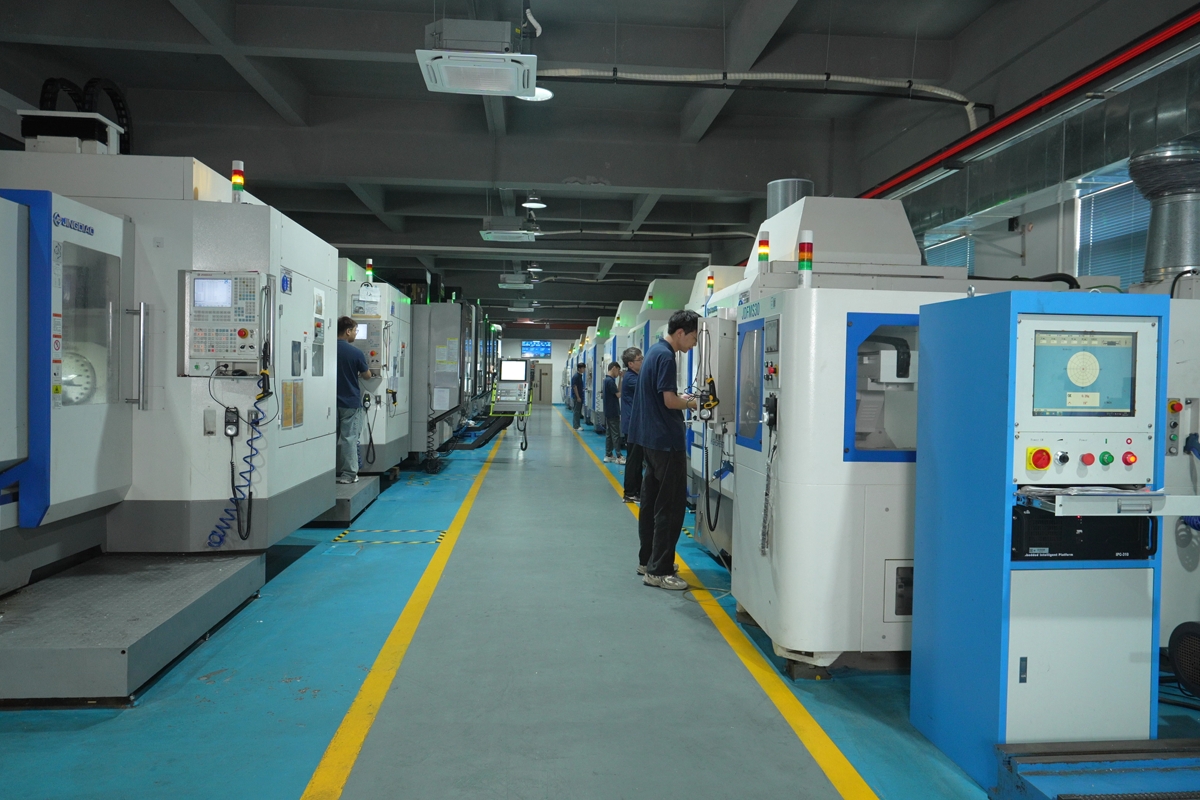
Frequently Asked Questions (FAQ)
What is the difference between 3+2 axis and continuous simultaneous 5-axis machining?
In 3+2 axis machining (positional 5-axis), the machine uses its two rotational axes to tilt the workpiece or spindle into a fixed angular orientation. Once locked in position, the cutting tool operates using only the three linear axes. Continuous simultaneous 5-axis machining moves all five axes simultaneously during the cut, which is essential for machining complex, organic surfaces like curved impeller blades.
What is RTCP and why is it mandatory for 5-axis operations?
RTCP stands for Rotational Tool Center Point. It is a controller-level software algorithm that dynamically tracks and compensates for the tool tip's position as the rotational axes pivot. Without RTCP, the program would lose its physical zero point whenever the machine tilts, leading to errors or severe tool collisions.
What are the most critical steps when learning how to set up a 5-axis CNC machine?
When learning how to set up a 5-axis CNC machine, operators must focus on three mandatory pillars: implementing elevated workholding (such as self-centering vises) to ensure spindle clearance, executing an automated center of rotation (COR) calibration cycle using a certified sphere to align machine kinematics, and running a complete digital twin collision simulation before allowing the tool to touch the raw material.
How does multi-axis milling cut down on tooling costs?
By tilting the workpiece, operators can approach deep cavities using short, highly rigid end mills rather than long, slender extensions. Short tools experience less vibration and deflection, which keeps cutting forces uniform and significantly extends tool life.
How does Zhihui Precision ensure the volumetric accuracy of its 5-axis machining services?
Every multi-axis production line at Zhihui Precision undergoes rigorous laser interferometer calibration and dynamic ballbar testing. This continuous monitoring maps and corrects minor geometric misalignments across the linear and rotational axes, ensuring uniform volumetric precision across the entire manufacturing envelope before manufacturing your custom components.
Is 5-axis machining profitable for mid-volume industrial batches?
Yes. Although the initial software programming and physical tooling setup take longer than a 3-axis operation, the ability to finish a part in a single setup significantly reduces total cycle time and labor costs, making it highly cost-effective for mid-volume production runs.
Conclusion
Transitioning to 5-axis CNC machining is a strategic choice that dramatically improve a production facility's manufacturing capabilities. By combining multiple operations into a single setup, workshops can lower production times, achieve excellent surface finishes, and easily handle complex component designs.Choosing the right manufacturing partner is key to successfully integrating this technology into your supply chain. At Zhihui Precision, we operate a 10,000-square-meter digitized facility equipped with over 50 advanced multi-axis centers to deliver elite, high-tolerance custom machining services. Backed by a team of over 100 skilled technical professionals, we provide the ultimate sourcing foundation required to execute your complex components with absolute confidence—from rapid prototyping to large-scale production.Ready to elevate your component precision and optimize your supply chain? Contact our application engineering team today on our Contact Page to request an instant manufacturing quote.